
How to Use a Safety Razor
A safety razor asks for a slightly different technique from a cartridge, and the difference is smaller than most people expect. Two things carry the whole shave: short strokes and light pressure. The rest is preparation and angle, and all of it is learnable in a week of ordinary shaves.
It is worth learning. One blade cutting at the surface is why safety razor users report less irritation and fewer ingrown hairs, and a blade costs around ten pence a shave.
The short answer
Load a fresh blade, lather with warm water, and hold the razor at roughly 30 degrees to the skin. Shave in the direction of hair growth using short strokes and light pressure; the weight of the razor does the cutting, so never press. Rinse the head every few strokes. Most people are comfortable by the third shave.
Step by step
1. Load the blade
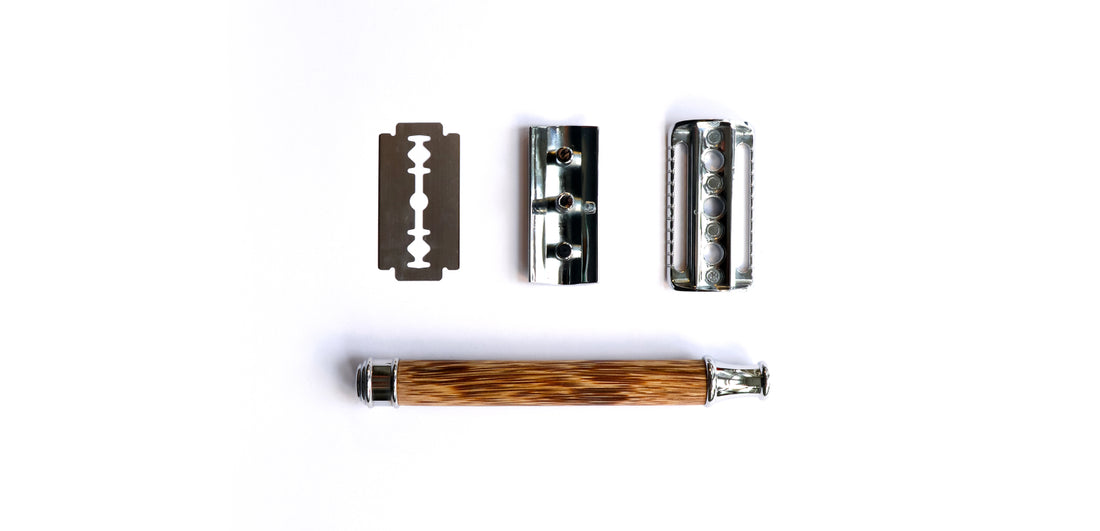
Unscrew the handle and separate the head into its two plates. Hold a fresh blade by its short ends, seat it on the guide posts of the top plate, then close the plates and screw the handle home. The blade should sit evenly, with the same sliver of edge showing on both sides.
2. Prepare the skin
Shave after a shower, or wash the area with warm water; warm, wet hair cuts with far less force. Build a lather from a shaving soap or cream, working it in with a brush in small circles. The lather is not decoration: it lifts the hair and cushions the blade.
3. Shave
Rest the head flat against your cheek, then lower the handle until the blade just meets the skin, roughly 30 degrees. Shave with the grain. Short strokes, light pressure; let the razor's weight do the work. Rinse the head every few strokes. For a closer finish, re-lather and take a second pass across the grain rather than against it.
4. Finish
Rinse with cool water, pat dry, and follow with a balm or moisturiser if your skin runs dry. Rinse the razor, shake it off, and store it somewhere it can dry; upright on a stand is ideal, because a dry edge stays sharper for longer.
What people get wrong
- Pressing. Cartridges train you to push; a safety razor punishes it. If you can feel resistance, you are pressing. Lighten the grip until the razor almost floats.
- Long strokes. A cartridge pivots to hold its angle; a safety razor does not. Short strokes keep the angle steady, which is what prevents nicks.
- Chasing closeness on day one. One pass with the grain, done well, beats three aggressive passes. Closeness arrives with technique, usually within a week.
- Stretching a dull blade. A blade is good for four to seven shaves and costs pennies. Change it at the first hint of tugging.
When to do something different
- Legs. The same technique on longer, flatter planes, so often easier than the face. Go carefully over knees, shins, and ankles: very short strokes, no pressure, skin held taut.
- Head. Work by feel and mirror, with the grain, in short overlapping strokes. Map your growth direction first; it varies more on the scalp than the face.
- Bikini line. With the grain only, skin held taut, fresh blade every time. Trim longer hair first so the razor cuts rather than catches.
- Coarse or curly hair. Stay with the grain and take two light passes rather than one firm one. The surface cut is what stops the hair re-entering the skin as an ingrown.
Related questions
How do you use a safety razor without cutting yourself?
Almost all cuts come from pressure or a wandering angle. Keep strokes short, keep the grip light, and let the head rest on the skin rather than digging in. An enclosed head design covers the blade corners, where most nicks start.
How many passes should I do?
One pass with the grain for an everyday shave. Add a second across the grain for a closer finish. Against the grain is for experienced hands and forgiving skin.
How often should I change the blade?
Every four to seven shaves, sooner if it tugs. At around ten pence a shave, there is no reason to stretch one.
Do safety razors help with razor bumps and ingrown hairs?
Yes. The British Association of Dermatologists notes that single blade razors reduce pseudofolliculitis, the bumps caused by multi-blade razors cutting hair below the skin line. One blade cuts at the surface, so the hair regrows the way it should.
That is the whole craft: warm skin, a fresh blade, short strokes, light pressure. If you are starting from scratch, the Kronos Safety Razor holds the blade at a fixed angle with the corners enclosed, and the Foundation Set covers the first month.